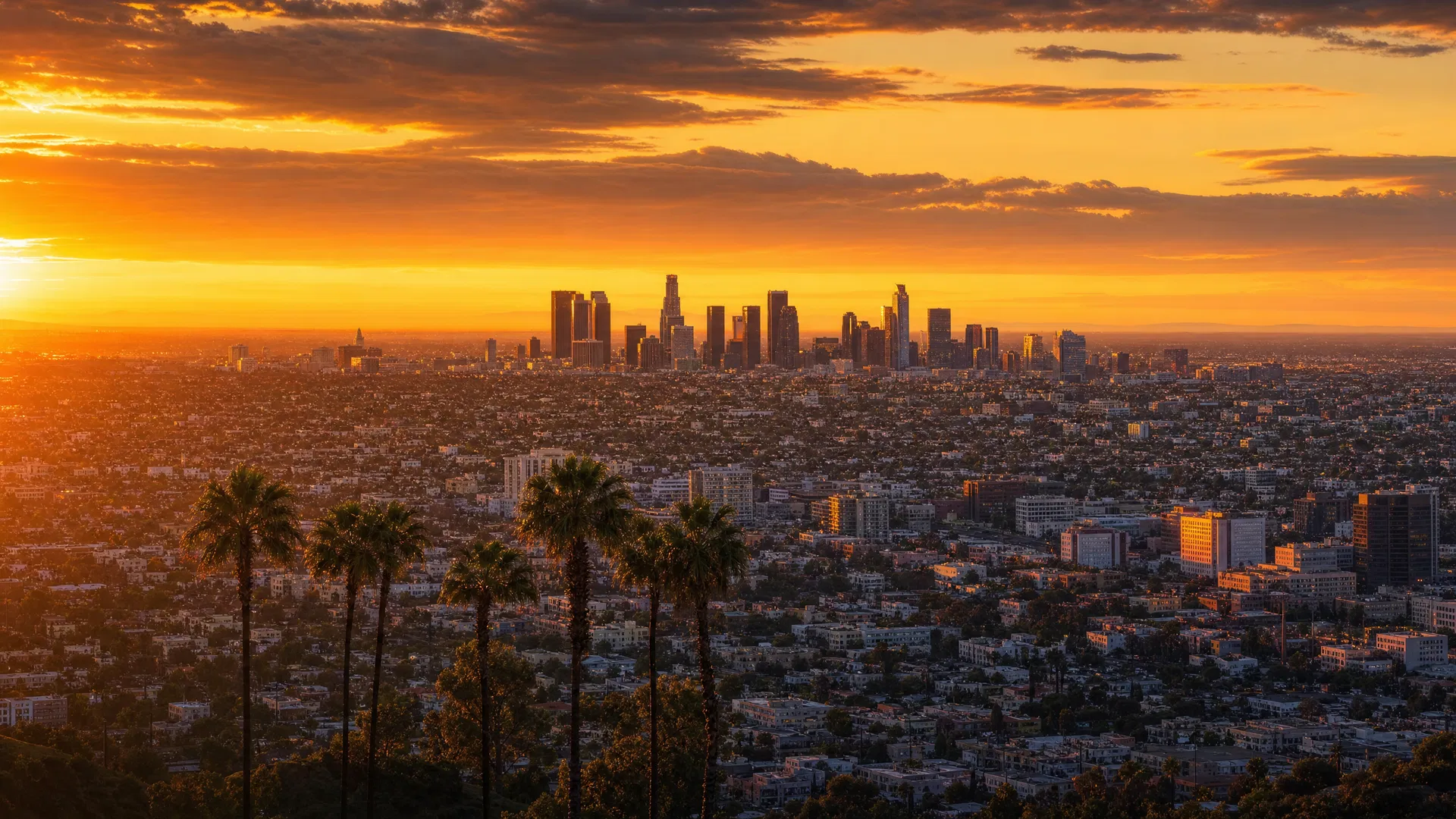
Los Angeles has one of the most quietly serious coffee cultures in the United States. While the city is better known for its film industry and freeway traffic, its independent coffee scene has grown steadily since the early 2010s into something genuinely worth paying attention to. From micro-roasters in Silver Lake to sand-brewed Middle Eastern coffee in Studio City, the range of what you can find in a single afternoon of driving is remarkable. For a city where the same diversity is navigable on foot, New York's borough-by-borough guide covers a comparable breadth of styles and neighborhoods.
This guide covers the cafes that are worth your time — not because they are photogenic (though many are), but because they take coffee seriously.
What Makes LA's Coffee Scene Different
Unlike New York or Chicago, Los Angeles does not have a single neighborhood that defines its coffee culture. The city is too spread out for that. Instead, the scene is distributed across a dozen distinct pockets: the eastside arts corridor running through Highland Park, Eagle Rock, and Silver Lake; the westside stretch from Culver City to Venice; the mid-city neighborhoods of West Adams and Leimert Park; and the valley communities that are often overlooked. Visitors planning a broader West Coast coffee itinerary should also read our guide to Portland's specialty scene, where the third wave originated and where the roaster-first philosophy that shaped LA's best cafes was first developed.
This geography means that finding great coffee in LA requires a bit of local knowledge. The best shops are rarely on the main commercial strips. They tend to occupy former industrial spaces, converted bungalows, or the ground floors of mid-century apartment buildings.
The Eastside: Silver Lake, Echo Park, Highland Park
The eastside has the highest concentration of specialty coffee per square mile in the city. Intelligentsia's Silver Lake location, which opened in 2007, was one of the early anchors of the third-wave movement in LA and remains a benchmark for espresso quality. The bar is long, the light is good, and the staff know what they are doing.
Cafecito Organico in Highland Park operates with a direct-trade sourcing model, working with small farms in Mexico and Central America. The coffee is roasted in-house, and the shop itself has the feel of a neighborhood institution rather than a destination cafe.
Creature's Plants and Coffee in Eagle Rock combines a working greenhouse with a full espresso bar. It sounds like a gimmick, but the coffee is legitimate and the space is genuinely pleasant. The combination of plants and pour-overs has made it one of the more followed cafes on Instagram in the region, though the quality holds up independent of the aesthetics.
Chinatown and Downtown
Cafe Tondo in Chinatown operates as a daytime cafe and bakery before transitioning into a wine bar in the evenings. The espresso program is tight, the pastries are made in-house, and the space has a European quality that feels unusual for LA. It is one of the few cafes in the city that works equally well at 8 in the morning and 9 at night.
Downtown LA's coffee scene has improved significantly in recent years, driven in part by the growth of the Arts District. Go Get Em Tiger, which started in Larchmont Village, has a location in the Arts District that draws a mix of creative professionals and remote workers. The coffee is consistently excellent, and the house-made oat milk has become something of a local legend.
West Adams and Leimert Park
Muso Coffee in West Adams is one of the most thoughtfully sourced cafes in the city. The shop emphasizes specialty coffee from sustainable farms and sources ceremonial-grade Japanese matcha alongside its espresso offerings. The interior is spare and considered, and the staff can speak at length about the provenance of what they are serving.
La La Land Kind Cafe operates with a social mission, providing internships and employment to young people transitioning out of the foster care system. The coffee is good, the service is warm, and the model has proven durable enough to expand to multiple locations across the city.
The Valley: Studio City and Beyond
Yala Coffee in Studio City offers something genuinely unusual: a sand-brewing method for Middle Eastern coffee. The technique, which involves heating a brass pot in a bed of hot sand, produces a coffee that is thick, aromatic, and unlike anything made with a standard espresso machine. It is worth the trip to the valley on its own.
What to Order
LA's coffee culture has a few local tendencies worth knowing. The city has embraced oat milk earlier and more thoroughly than most American markets, and most specialty shops now offer house-made versions. Cold brew is available year-round, which makes sense given the climate. Matcha lattes appear on more menus here than in most cities, reflecting the influence of Japanese coffee culture on the local scene.
Espresso quality varies more than it should across the city, but the shops listed here are consistent. If you are ordering a straight espresso, ask about the current single-origin offering — most specialty shops rotate their espresso bar seasonally.
Practical Notes
Parking in LA is its own subject. Most of the eastside shops have street parking that requires patience. The westside shops often have lots, but they fill quickly on weekends. The valley shops are generally easier. If you are visiting multiple cafes in a single day, the eastside corridor from Highland Park to Silver Lake is the most walkable stretch in the city.
Hours vary widely. Many of the smaller independent shops close by 3 or 4 in the afternoon. If you are planning an evening visit, Cafe Tondo in Chinatown and a handful of Arts District spots are your best options.
The LA coffee scene rewards exploration. The best shops are not always the most famous ones, and the city's sprawl means that genuinely excellent coffee exists in neighborhoods that rarely appear on any best-of list. The ones above are a starting point, not a ceiling.
Los Angeles Coffee: The Quiet Revolution
Los Angeles has one of the most geographically dispersed coffee scenes in the world, which makes it easy to underestimate. Unlike cities where coffee culture concentrates in a few walkable neighborhoods, LA's coffee scene is spread across 503 square miles of city and dozens of distinct communities. The result is a coffee culture that is harder to navigate but deeper than it appears.
The city's coffee identity was shaped by a handful of roasters who arrived in the late 2000s and early 2010s. Intelligentsia Coffee opened its Silver Lake location in 2007 — the first outpost of the Chicago-based roaster outside its home city — and helped establish Silver Lake as the center of LA's specialty coffee scene. G&B Coffee, founded by Charles Babinski and Kyle Glanville (both former Intelligentsia baristas), opened in Grand Central Market in 2013 and brought high-quality espresso to a historic public market that serves a much broader demographic than a typical specialty cafe.
The Neighborhoods
Silver Lake remains the most coffee-serious neighborhood in the city. Intelligentsia's original LA location on Sunset Boulevard is still operating and still excellent. Dinosaur Coffee on Griffith Park Boulevard is a neighborhood institution with a loyal following. The neighborhood's mix of artists, musicians, and tech workers creates a coffee culture that is both serious and unpretentious.
Echo Park is adjacent to Silver Lake and has a younger, more experimental coffee scene. Dayglow, which operates a small-format cafe on Sunset Boulevard, is known for its natural wine and coffee combination — an unusual pairing that has attracted a devoted following.
Downtown LA has seen the most growth in the past decade. The Arts District, which runs along the LA River east of downtown, has become one of the most coffee-dense areas in the city. Go Get Em Tiger (GGET), which roasts in-house and operates multiple locations, has its Arts District location in a converted industrial space that is one of the most impressive cafe environments in the city.
Venice has a beach-adjacent coffee culture that is more relaxed than Silver Lake or the Arts District. Intelligentsia's Abbot Kinney location and Menotti's Coffee Stop are both worth visiting if you are in the area.
The LA Espresso Style
Los Angeles espresso tends to be lighter and more fruit-forward than in cities with Italian-influenced coffee traditions. The influence of Intelligentsia, which pioneered light-roast espresso in the United States, is visible across the city's specialty cafes. If you are used to dark, bitter espresso, LA espresso may taste unexpectedly bright and acidic — that is intentional, not a flaw.
Milk drinks are popular in LA, and the city has a strong culture of alternative milks — oat, almond, and macadamia are standard options at most specialty cafes. The warm climate also means cold brew and iced coffee are popular year-round, not just in summer.
Logistics
Getting around LA requires a car or rideshare. The coffee neighborhoods are not walkable from each other — Silver Lake to the Arts District is a 20-minute drive, and Venice is 30–40 minutes from either. Plan your coffee itinerary around your other activities rather than trying to visit multiple neighborhoods in a single day.
Parking in Silver Lake and Echo Park is street parking only, and it can be difficult on weekend mornings. The Arts District has more parking options, including several lots near the main commercial streets.